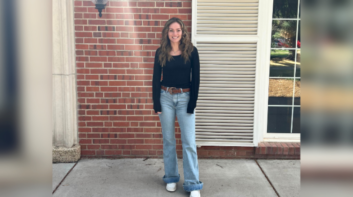




Layla Jane was only 13 years old when a surgeon at Kaiser San Francisco removed her healthy breasts.
“I was convinced that this was the right decision, and I hated my body,” she told IW Features. “I felt, ‘Well, I’m already on the train. There’s not really any getting off, and this is what’ll make me happy.”
That “train” was a fast-tracked pipeline of puberty blockers, testosterone injections, and a double mastectomy––all performed on a confused child who had been in therapy since first grade for depression, anxiety, and even suicidal ideation.
Yet, instead of asking why an 11-year-old girl hated her own body, or why she battled with all-consuming thoughts of death when she was only in second grade, the medical “professionals” around her treated her gender distress like an emergency to be affirmed, not introspectively investigated.
Jane said she first began to question her “gender identity” when she was 11 years old. Puberty came early for her, and as a result, she was the subject of bullying by her peers for developing before others.
Jane then retreated into the internet for solace.
“I kind of turned to myself a lot and spent a lot of time on the internet,” she recalled. “I had unfettered internet access at that age.”
Scrolling through Instagram, she stumbled upon posts originating from Tumblr about different LGBT identities.
“It sounded like a really plausible way to escape being a woman, which was really scary to me at the time,” Jane said of transgenderism. “And I latched onto it as just an easy answer for my distress that I’d been experiencing.”
At 12 years old, she tried on a new name and male pronouns. When she told her therapist about her new identity, that therapist “didn’t tell my mom,” Jane remembered. But that therapist did immediately begin to “write out referrals for specialist doctors in the transgender field of medicine,” she said.
Her parents were blindsided, but desperate to do right by their child.
“My parents were very stressed and confused and thought that having a transgender child was akin to having a gay child,” she said. “They just wanted me to be happy and healthy––whatever it meant––and that’s what they were being told that needed to happen.”
Jane’s first specialist at a local Kaiser clinic agreed with the diagnosis of gender dysphoria and prescribed her birth control pills intended to reduce her female hormonal symptoms. When birth control made Jane violently ill, however, her therapist referred her to the Proud Clinic in Oakland.
In late 2016, Jane was prescribed Lupron to prevent any further potential breast growth and to halt menstruation. And by June 2017, Jane started testosterone. She was just 13 years old, injecting a Schedule III controlled substance into her stomach––on her own.
“A nurse at the Proud Clinic showed me how to do my own injections,” she revealed. “To trust a teenager with a drug that has addictive qualities to do that by themselves, I don’t feel like is fully responsible.”
Within months, doctors scheduled her double mastectomy.
Jane remembered the manipulation used to secure parental consent for the risky surgery. Her parents––like many other parents of gender-confused youth––were told they had to choose between a living son or a dead daughter. And at this point, Jane, too, believed that the only way to live was to erase her blossoming womanhood.
“I wanted to just pass and live as a boy and have nobody know,” she said. “I was convinced that this was the right decision, and I hated my body.”
Her surgeon, a plastic surgeon from the Bay Area, performed the double mastectomy (called top surgery among transgender activists) in September 2017.
“The surgery was referred to with watered-down terms such as ‘top surgery,’” Jane recalled. “I was told that I would never be able to ‘chest feed,’ but I wasn’t told that among the complications would be nerve pain, which I deal with every day.”
That nerve pain still “sometimes feels like slicing, or like an electrical zap, or sometimes it feels like itching but I can’t scratch it because the skin itself is numb, but the nerves underneath are really erratic,” Jane said.
No one told her she’d still have remnants of mammary glands––“severed,” but capable of producing milk with no outlet. Whether this was an intentional or unintentional consequence of the procedure, Jane said she isn’t certain. But she does know it’s a common complication among transgender patients.
“If I were to get pregnant, I would likely produce some milk, but it would be trapped with no way to get out and cause serious infection,” she said. “They also did not impress upon me that I could still technically get breast cancer.”
But when the bandages first came off, Jane felt a fleeting high.
“On one hand, I was happy when the bandages first came off… I thought it would mean that I could be my true self,” she admitted. “But on the other hand, too, I was a bit horrified. The immediate post-op results are kind of gory, and dealing with the post-op scare was still kind of scary.”
By 17 years old, however, the illusion had cracked.
“When I decided to transition, I was not in a very sound state of mind, to the point where I didn’t believe that I was going to live to be 18,” she said. “So when I got to 17 and realized, ‘Oh, I am going to make it,’ I did a lot of introspective thinking and I was just like, ‘This isn’t how I want to live my life.’”
Jane decided to wean herself off testosterone in secret. She said she was scared to even admit that, after all the years of hormonal and then surgical interventions, she was choosing to stop testosterone.
When she was about to turn 18 years old, her clinic called her to ask if she wanted a referral to the adult program, as she was about to age out of their pediatric care.
“I declined,” she said, and yet the clinicians “didn’t poke or pry or ask any questions” about why she wasn’t continuing testosterone. “I feel like it was really negligent,” Jane added.
By 18 years old, Jane had been poking around online, researching her doctors’ names out of curiosity. One of them––the same Proud Clinic doctor who had “treated” her––was already facing legal action, she found.
“She had one star and one comment: ‘Terrible doctor, currently being sued by Chloe Cole.’”
Jane then looked up who Cole was and watched one of her interviews. Resonating with Cole’s situation so intimately, Jane contacted the firm representing Cole by filling out a form about having a “similar story.”
That next morning, Cole’s lawyers got back to Jane, and next thing she knew, they were having a meeting to discuss legal action.
Her lawyers believed her case was strong.
“In terms of a medical malpractice suit, it did have a lot of merit,” she said. “This is an egregious case, especially the lack of care for my comorbidities.”
But two years into the arbitration, the unthinkable happened: Jane’s arbitrator threw out her case on the basis of the statute of limitations laid out in California Code of Civil Procedure §340.5, which requires medical malpractice claims to be filed within either three years of the injury itself, or one year after discovering the injury.
“We thought that, so long as I sued within three years of me realizing the damage and tapering off the testosterone, I would’ve still been under the statute of limitations,” she said. Her arbitrator, however, ruled that the clock started ticking after her mastectomy.
“I would’ve been 16 when three years ran out, and I hadn’t detransitioned until 17, almost 18,” she said.
Jane recalled feeling shocked by the results. “Nobody thought this was going to happen. My legal team, who are very confident lawyers, were blindsided even, and it made me lose faith in the justice system entirely.”
The statute of limitations––designed to prevent stale claims––had locked a teenager out of her only chance at accountability.
“Three years is not enough, especially in terms of pediatric patients,” Jane argued. “I think the average rate of trans regret is somewhere between four and eight years, which is where I would fit under.”
Though her case was dismissed, the legal process was not pointless. Jane’s medical records revealed more negligence.
“There are standards by WPATH, and those standards would’ve made them [her doctors] give me more time between starting hormones and getting surgery,” she said.
Furthermore, Jane said her records had charting errors, including one that claimed she had a history of hysterectomy––which she did not.
Still, her body bears permanent damage that she may never be able to legally redress. Jane attributes the testosterone, for example, to damaging her liver when she was only 14.
“There is no other reason my liver should have been damaged besides testosterone,” she said, adding that she had no issues with underage drinking. “I have genital atrophy, I have urinary issues… it’s almost like I’m a menopausal woman.”
And even daily life brings reminders of the harm done to her body. When she was only around 15 years old, she started noticing a lot of joint issues. To this day, “a lot of days I can just roll over in bed and hear my hip crack multiple times.”
Denied justice, Jane has instead turned to advocacy.
“If I’m not going to get compensated anyway, my doctors aren’t going to face consequences, then I’m going to be outspoken about this,” she said. “I am going to anybody that will listen. I don’t want to see more kids be harmed and come out the other side living the way that I do.”
As part of this advocacy, Jane has since spoken at federal panels and even returned to protest outside the same Kaiser clinic that took her breasts as a child. There, she recalled a “really level-headed conversation” with a minor who had been toying with alternative gender identities. Jane told this adolescent about the risk that she would’ve wished she had known about when first boarding the gender medicine train.
“If I could go back in time and talk to my 11-year-old self, I would tell her that there’s nothing wrong with her,” Jane said with softness and sympathy. “That it’s perfectly okay to just be kind of a weird girl and have weird interests and be a little atypical.”
She said she’d tell her younger self that, though it hurts in the moment when peers pick on her, those people don’t ultimately matter in the long run; that a lot of her social difficulties have to do with her autism; and that the anguish is only temporary.
“And I would give her a hug,” she said.
Jane’s story certainly constitutes a rallying call for reform within adolescent care and statute of limitations generally. She wants new legal standards that recognize the long arc of regret.
“I want to see the laws of statutes of limitations change as far as this form of medical abuse,” she said. “I want to see healthcare become more knowledgeable about how to treat detrans patients. I want there to be billing codes and insurance coverage for the help we may need.”
But for now, she’s learning how to live with the irreversible.
“All I can hope is that one day, I can feel somewhat whole again and have a sense of normalcy and just be happy in myself,” she said.
And maybe, someday, a child like Jane won’t have to spend her adulthood picking up the pieces of a childhood that ideologues stole.